Courtyard Zen: Quest
- 4.8
- Rating
- 10.00K
- Installs
- Free
- Price

 Analysis by App-foxy
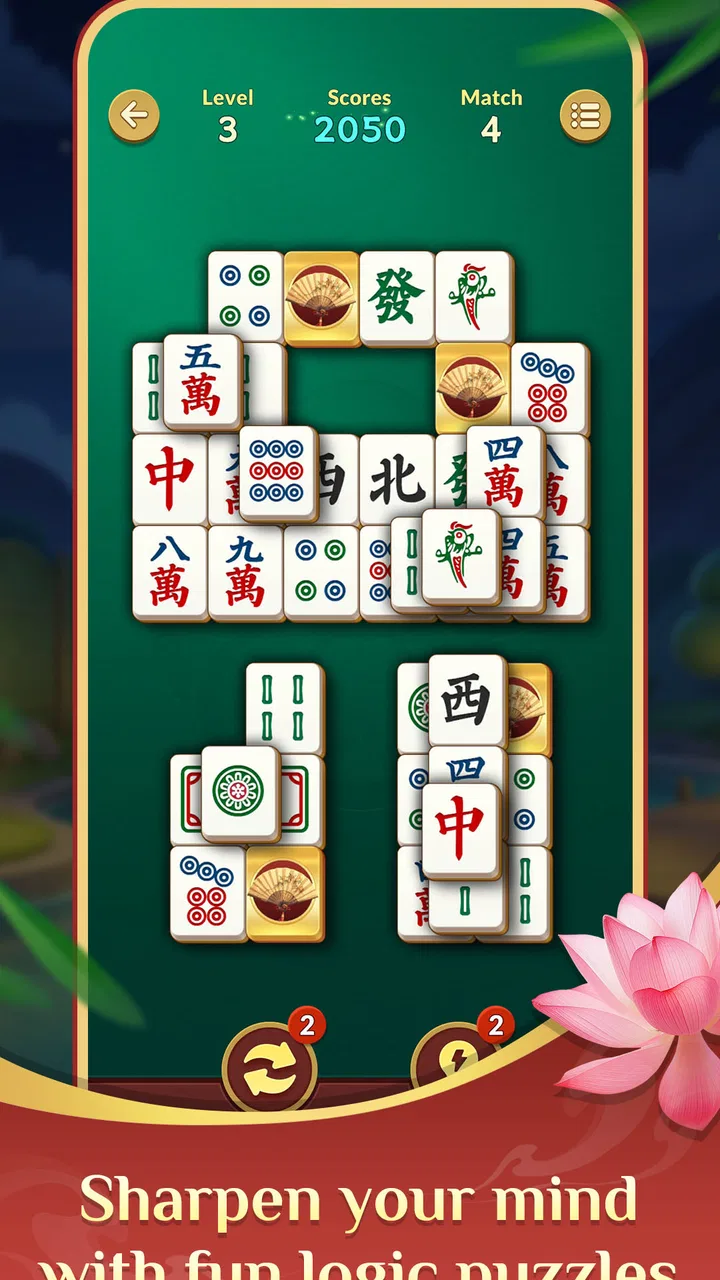
Courtyard Zen: Quest is an unusual combination: part launcher, part app-search tool, and part relaxing mahjong-style matching game. I found that mix more interesting than the short store description initially suggests, because it changes the way the app fits into a phone routine. Instead of opening a puzzle only when I want a full gaming session, I can approach it as a small pause between ordinary tasks, with app access and a calm matching activity sharing the same space.
That dual purpose also makes the game harder to judge by the standards I would use for a traditional puzzle title. It is not trying to replace a deep strategy game, a competitive match-three app, or a complete home-screen replacement. Its appeal is quieter: a simple action, immediate visual feedback, a modest sense of progress, and an easy point at which to stop. In my experience, that makes it most suitable for people who want a gentle mental break rather than a demanding challenge.
How the matching loop feels in everyday use
I find this kind of matching loop easiest to enjoy when I treat it as a pause rather than a score to optimize: a quick scan, a deliberate choice, then a moment to see how the board has changed. That habit keeps the activity calm while making each move feel intentional. It also gives me a useful way to judge whether the game’s gentle pace suits me before I decide how it fits into my phone routine.
You May Also Like

 AccuWeather: Weather Radar
AccuWeather Review: A Quick, Clear Forecast for Everyday Decisions
For everyday plans, the best forecast is the one you can understand quickly. AccuWeather makes rain timing, radar, and local conditions easy to act on, with a few trade-offs.

 Hill Climb Racing
Why Hill Climb Racing Still Turns Crashes Into One More Run
A tiny car, a bumpy hill and one more upgrade: Hill Climb Racing keeps resurfacing because its simple chaos makes every near-miss feel personal.

 AliExpress - Shopping App
AliExpress Makes Global Shopping Feel Personal, but Shoppers Bear the Risk
AliExpress turns a global marketplace into a pocket-sized discovery engine. Its reach is useful, its shopping loop compelling, and its trade-offs easy to miss.

 Lords Mobile: Kingdom Wars
Lords Mobile Is a Kingdom-Building Routine, Not a Quick Match
A case-by-case verdict on the building, battles, device demands, and social commitments that make Lords Mobile rewarding for some players and exhausting for others.

 PDF Scanner app - TapScanner
TapScanner Makes Paperwork Easier to Capture, Check, and Share
TapScanner makes scanning with a phone feel less like a rescue operation and more like a dependable step in getting work done. Its capture tools are useful, though not flawless.

 Block Blast!
 Shows How Much a Puzzle Game Can Leave Out
A quiet grid game shows why puzzle players increasingly value instant clarity, repeatable skill and low-pressure play—and where the genre still needs to catch up.
More From Our News Desk
View All News


The first action is easy to understand
The natural starting point is matching identical mahjong-style pieces. I do not need a long explanation before making the first move: I look for a pair, tap through the interaction, and watch the available layout change. That low entry barrier matters because the app’s strongest use case is a short visit. If I have to study complicated rules before relaxing, the whole idea loses its charm.
The mahjong influence gives the board a familiar visual language without making the experience feel like a conventional card or tile game. The important distinction is that the pleasure comes from noticing relationships between pieces and gradually clearing visual clutter. I am not chasing a complicated build, managing a character, or memorizing a large ruleset. The focus stays on the next useful match.
I also like that the launcher context gives the opening moment a practical purpose. I can search for an app and then choose to remain in the matching activity, rather than treating the game as a completely separate destination. That makes Courtyard Zen: Quest feel more like a small pocket environment than a single-purpose puzzle. For someone who regularly unlocks a phone without knowing exactly what to do next, the combination can turn idle browsing into a more deliberate pause.
There is a trade-off here. Players who expect a large campaign, elaborate objectives, or a constantly changing set of mechanics may find the first action too restrained. The design seems built around accessibility and calm, not surprise. I would recommend it to a friend who enjoys sorting, visual matching, and quiet repetition; I would not point a puzzle enthusiast toward it as a substitute for a demanding logic title.
Feedback creates a gentle rhythm
The satisfying part of the loop is the relationship between action and response. I choose a pair, receive a clear change on the board, and immediately understand that the decision mattered. That rhythm keeps the activity readable. There is no need to wonder whether a move registered or whether the board has advanced. The disappearing or changing arrangement provides the useful feedback, and the reduced clutter makes the next choice easier to see.
This is where the app’s relaxing character becomes tangible rather than just descriptive. The feedback does not need to be dramatic to be effective. A small improvement in the board is enough to encourage another look. I can settle into a pattern of scanning, selecting, clearing, and scanning again. For me, that is more calming than a puzzle that constantly interrupts with urgent timers or competitive pressure.
A useful tip is to treat the board as a visual field instead of immediately hunting for the fastest pair. I get more from the experience when I pause for a moment, identify several possible matches, and then choose the one that leaves the layout easiest to read. That approach turns the game into a light exercise in attention. It also helps prevent the familiar frustration of making a quick move and then feeling that the remaining pieces are harder to organize.
The limitation is that this feedback rhythm may become predictable for players who need strong variety. The same basic action remains the center of the experience, so the enjoyment depends on whether you like repetition with a calming cadence. If you prefer puzzles that constantly introduce new rules, increasingly complex systems, or a clear competitive ranking, the response loop here may feel too soft.
What counts as a reward
The main reward is the visible improvement of the board and the feeling of having completed a small, orderly task. That may sound modest, but it is exactly why the game works as a break. I can begin with a crowded arrangement, make a series of understandable choices, and finish with a cleaner result. The reward is not only a win condition; it is the sense that my attention produced a visible change.
That makes the experience useful after mentally noisy activities. If I have just finished a long message thread or spent too much time switching between apps, a short matching session gives me one contained problem. I am not required to remember a complicated narrative or prepare for another player. I simply focus on what is visible, make a move, and let the board answer.
Another non-obvious strength is the way the launcher and puzzle roles can support different moods. When I need efficiency, the app-search side is the practical reason to open it. When I have a spare moment, the matching side offers an optional reward for staying a little longer. That means the game does not have to compete with every other puzzle app for a dedicated place on my phone. It can enter a routine through utility and then provide relaxation without demanding that I commit to a full gaming block.
Still, I would not describe the reward as deep progression. The verified store details identify a relaxing mahjong-style matching activity, not a role-playing system or a broad achievement structure, so I approach it as a repeatable moment of focus rather than a long-term mastery project. People who need unlock trees, story chapters, or powerful goals may find the payoff limited. The right question is not whether it offers the biggest reward in the puzzle category, but whether a small completed board is enough to make a short break feel worthwhile.
Resetting without making a commitment
The reset is an important part of the appeal. Once a small session reaches its natural stopping point, I can leave without feeling that I have abandoned a major undertaking. There is no need to reserve an evening or protect a long chain of progress in my schedule. The activity can begin again when I want another quiet interval, which gives the loop its most practical quality: it is easy to enter and easy to leave.
I find that especially useful in situations where attention comes in fragments. Waiting for an appointment, taking a break from studying, or sitting down after finishing a household task are all better fits than a long commute if I want something lightweight. I can play until my focus returns, then close the app and continue with the day. The reset feels like a clean boundary rather than a punishment for stopping.
My best everyday workflow is to use the launcher first when I have a specific app in mind, then decide whether I want one matching session before moving on. If I open the game directly, I give myself a simple limit: clear a manageable arrangement or stop at the first natural pause. This prevents the relaxing loop from turning into unconscious scrolling. It also preserves the reason to return, because the next session still feels like a fresh small activity rather than an obligation.
That same simplicity can be a weakness for people who want persistent momentum. If you enjoy building a long streak, comparing detailed results, or carrying a complex plan from one session into the next, this reset-friendly structure may seem thin. Courtyard Zen: Quest is better for repeatable calm than for a dramatic sense of escalation. I would skip it if my main goal were a substantial puzzle campaign with a strong end-to-end arc.
Where it stands beside familiar puzzle alternatives
Compared with a standard mahjong solitaire game, this title’s distinctive point is its launcher connection. A traditional alternative may offer a more focused puzzle identity, while this app places matching beside app discovery. That is convenient if I want one place for a practical phone action and a relaxing activity, but it also means the game may feel less specialized than a dedicated mahjong product.
Compared with match-three games, the mood is different. Match-three titles often emphasize quick chains, bright reactions, escalating boards, or pressure to keep moving. Courtyard Zen: Quest suits me better when I want to slow down and inspect the arrangement. The exchange is energy: I get a calmer visual task, but not necessarily the constant excitement that makes arcade-style puzzles compelling.
Compared with logic games, it asks less of my memory and planning. That is a benefit when I am tired, distracted, or looking for a gentle reset. It is not the best choice when I want to train through difficult deductions or wrestle with a problem that takes several minutes of concentrated reasoning. The app’s value comes from accessibility, not intellectual intensity.
There is also a practical comparison with using a regular phone launcher and a separate puzzle game. Separate apps can provide deeper specialization, but they require more switching and more decisions. This app reduces that friction by placing the two activities together. Whether that is an advantage depends on my habits: if I already have a launcher I love and a favorite puzzle installed, the combination may not justify changing my routine. If I want a softer, less cluttered way to move from app search into a break, the pairing makes more sense.
Who will enjoy it, and who should pass
I think the strongest audience is someone who likes visual matching, gentle repetition, and short sessions. It can suit a casual player who does not want to learn a complicated system, as well as someone who enjoys having a small calming activity available during gaps in the day. The launcher element may also appeal to people who appreciate practical tools with a bit of leisure built in.
The game is marked for Teen content, so I would keep that audience label in mind when deciding whether it fits a younger player. It is free to install, which makes trying the central loop straightforward, but free access alone does not make it the right match for everyone. A player looking for multiplayer competition, a rich story, hardcore puzzles, or a large progression structure should choose a more specialized alternative.
I would also skip it if I dislike apps that combine utility and entertainment. Some people want their launcher to stay purely functional and their games to offer a complete, focused package. For them, the split identity may feel unnecessary. Courtyard Zen: Quest works best when that blend sounds helpful rather than distracting.
Device fit, maturity, and first impressions
The game is available for Android devices running version 8.0 or later, and its current release is version 1.1.0. That gives it a reasonably clear starting point for anyone checking compatibility before installing. I would still approach the first launch with the expectation of a compact, focused experience rather than a large game client, because the central idea is app search paired with a relaxing matching activity.
The developer is HomeTech & Data Solutions, LLC. The app has reached over ten thousand installs, with an average rating of 4.8 from over five hundred ratings and more than one hundred reviews. Those figures suggest that the people who have rated it generally respond well to the concept, while the scale also tells me this is a focused app rather than a huge mainstream gaming platform.
One practical tip is to judge it after using both sides of the experience. If I only test the puzzle, I may miss the reason for the launcher design. If I only search for apps, I may overlook the calming loop that gives the product its personality. The combination is the point, and its usefulness depends on whether those two actions naturally fit into my phone habits.
My verdict on the complete loop
The action is clear: find a matching pair and make a simple choice. The feedback is immediate: the arrangement changes and gives me a cleaner field to inspect. The reward is modest but tangible: a small sense of order and completion. The reset is forgiving: I can stop without turning a short break into a commitment, then return when I want another quiet task.
That loop is why I would recommend Courtyard Zen: Quest to a friend who wants a calm puzzle tucked into a useful phone tool. I would describe it honestly as a light, repeatable experience rather than a deep mahjong campaign. Its best feature is not complexity; it is the way app search and matching can sit together without forcing every visit to become a serious gaming session.
After using it, I would keep it installed if I valued gentle transitions during the day: search for something, clear a few pairs, then reset and move on. I would remove it if I wanted stronger progression, more demanding logic, or a dedicated launcher with no game attached. For the right player, the reason to begin another session is simple: the previous one offered a calm, visible improvement without asking for much time. That is a small promise, but this app understands it well.
FAQs for Courtyard Zen: Quest
01What is Courtyard Zen: Quest?
Courtyard Zen: Quest is a relaxing puzzle and progression game built around restoring and exploring a peaceful courtyard environment. During my time with it, the experience focused on completing challenges, interacting with the setting, and gradually improving the space. It combines calm presentation with quest-based objectives, making it suitable for players who prefer gentle gameplay rather than fast action or competitive mechanics.
02How does the gameplay in Courtyard Zen: Quest work?
The game generally revolves around completing quests and solving tasks to move the courtyard’s development forward. Objectives may involve matching, arranging, collecting, or interacting with different elements, depending on the stage. Progress is designed to be gradual, so new areas and activities become available over time. The controls are straightforward, although some later challenges may require patience and careful planning.
03Is Courtyard Zen: Quest free to download and play?
Courtyard Zen: Quest can be downloaded without an upfront purchase, but availability of optional in-app purchases may depend on the version and platform. These purchases can potentially provide extra resources, boosts, or convenience features. You can normally play through the main experience without paying, although progress may become slower if the game uses limited energy, timed rewards, or other waiting systems.
04Does Courtyard Zen: Quest require an internet connection?
The basic gameplay may work in some situations without a constant connection, but an internet connection is often recommended for the complete experience. Online access can be needed for advertisements, cloud saves, updates, events, account features, or purchases. Before traveling or playing offline, it is worth testing the game on your device, because certain quests or progress features may not function correctly without connectivity.
05Is Courtyard Zen: Quest suitable for children and casual players?
Courtyard Zen: Quest is generally approachable for casual players because its presentation is calm, the controls are easy to understand, and the objectives are introduced progressively. However, parents should still check the store rating, advertising policy, and in-app purchase settings before allowing children to play. Some quests may also include timers or resource limits, which can encourage repeated play or optional spending.
Pros
- Relaxing zen-inspired atmosphere suitable for short play sessions.
- Simple controls make it accessible for casual players.
- Quest-based progression gives each session a clear objective.
- Gentle visual design creates a pleasant
- low-pressure experience.
- Works well as a calming break between more demanding activities.
Cons
- Progress may feel repetitive once the main mechanics become familiar.
- Some players may find the peaceful pace too slow.
- Limited challenge can reduce long-term appeal for experienced gamers.
- Certain features or content may require in-app purchases.
- Performance can vary on older phones or lower-end devices.

Courtyard Zen: Quest
Gallery